
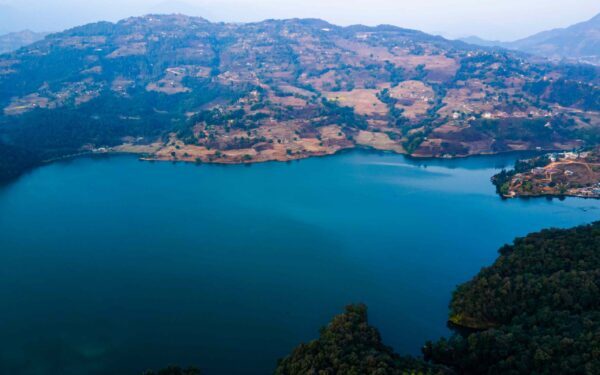
Lake Kivu is located in “high Africa” or the eastern part of the continent. This body of water conceals a particular danger, despite its truly crystal-clear water. Numerous resorts and hotels have been built along the shoreline, where tourists from different corners of the planet stay. In this overview, you can learn more about the lake’s location, its flora and fauna, and discover what danger lurks beneath the calm water surface.
Location and History of Lake Kivu
According to historical data, the lake was discovered in 1894 when German traveler, geographer, and explorer Gustav Adolf von Götzen reached this territory. Since that time, many interesting events and military conflicts have been associated with the lake, including the conflict between the Hutu and Tutsi peoples and their allies living in Congo. All of this led to the gradual destruction of entire ethnic groups in Rwanda in 1994. It was into Lake Kivu that the bodies of all those killed in the organized military conflict were dumped.
Today, Lake Kivu is one of Africa’s most beautiful places, located between Rwanda and Congo. The lake is part of the Great African Lakes group. Its surface area reaches 2,700 km², and its elevation above sea level reaches 1,460 m. The main basin of the lake is located in the rift valley, which is constantly expanding and increasing in size. All of this contributes to high volcanic activity in the region. As a result, the depth of this clear-water body is gradually changing, with maximum depth measurements already reaching 496 m. With such results, Kivu ranks 19th in the list of the world’s deepest lakes.
Mountains surround the lake. Here is also located Idjwi (Congo) – one of the world’s largest islands situated in a freshwater body. Besides this island, the territory offers tourists the opportunity to explore other equally picturesque islands, peninsulas, and beach areas of stunning beauty: Goma (Congo), Bukavu (Congo), which together create a complete archipelago.
Methane deposits have been found on the bottom, with quantities measured at approximately 55 million m³. Locals actively extract methane for further use at one of the Bralirwa breweries in Gisenyi.
Flora and Fauna
The lake’s flora provides an opportunity to explore the diversity of plants that have already adapted to highland conditions and volcanic activity in the region. For example, the freshwater contains plenty of phytoplankton, which serves as food for most aquatic microorganisms (such as zooplankton and others). Additionally, phytoplankton actively participates in photosynthesis, enriching the water with oxygen.
However, the activity of some volcanoes has left its mark on the flora and composition of the freshwater. The presence of methane and carbon dioxide accumulated at the bottom negatively affects the development of certain plants, making Lake Kivu’s flora somewhat poor compared to other water bodies.
In the coastal zone, you can find plant species such as:
- papyrus
- reeds
- other plants that have successfully adapted to life in conditions of high humidity
On the shore grow many species of shrubs, trees, and grasses characteristic of Rwanda and Congo. These plants form the coastal ecosystem, helping to create a favorable habitat for the residents of these areas.
The lake’s fauna consists of about 28 species of different fish, half of which are cichlids (a large order of perch-like fish). For Rwanda and Congo, Kivu is considered an important source of fish, as the lake provides more than 20,000 tons of fish annually. Fishing thrives also because of the absence of large predators (crocodiles, hippos), which means it’s safe to swim in the water body. Thanks to fishing opportunities, the lake provides livelihoods for about 500,000 people.
What Danger Does Lake Kivu Hide for Local Residents?
Even the many advantages that Lake Kivu offers to locals and tourists cannot distract attention from its particular danger. Due to its rift origin and close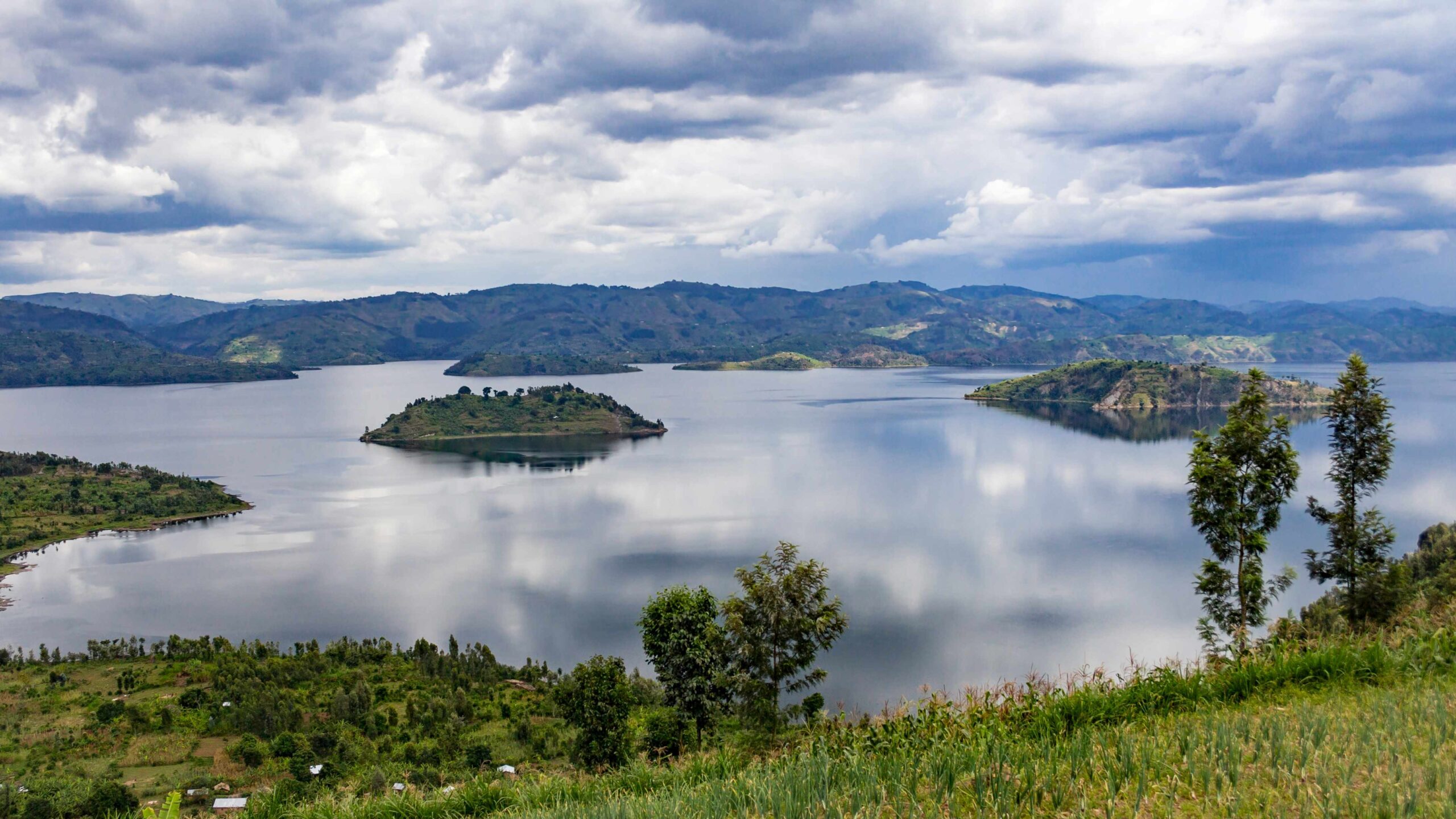 proximity to volcanoes, carbon dioxide from the earth’s depths accumulates on the bottom. Certain types of bacteria living in the freshwater convert part of this gas into methane, which gradually accumulates in the lower layers.
Another interesting feature of the lake is that freshwater practically cannot evaporate from the surface. This is related to the increased humidity level in the region and constantly maintained high air temperatures. All this leads to the formation of a water vapor layer above the surface, which complicates the usual water evaporation process. The great depth and lack of evaporation in the lake negatively affect possible water circulation, which is necessary, so dangerous gases accumulate in one area.
Scientists find it difficult to answer the question of exactly how much gas has already accumulated and what their precise percentage ratio is. But one thing is clear: this water body is among the world’s largest reservoirs of these gases.
Together with unstable seismic activity in the region, gas accumulations pose great danger to all residents and could lead to a large-scale catastrophe. In case of earthquakes or volcanoes that might awaken, the inevitable will happen – a powerful gas explosion threatens the lives of about 2 million people. As a result, gas enters the air, poisoning flora and fauna within a radius of several dozen kilometers, as happened in 1986 at Lake Nyos. However, in 2002, an earthquake occurred in Congo that had no effect on Lake Kivu’s condition, so scientists struggle to answer when exactly a real catastrophe might happen.
But the situation is complicated by the fact that the lake’s surroundings have very high population density, meaning the number of victims could be large. Therefore, scientists together with local authorities are concerned about solving this issue and how exactly to extract dangerous gases from the lake bottom. For example, the Rwandan government has launched power plants from its part of the water body – they generate energy by burning gases obtained from the lower layers. Plans include building another power station with a capacity of 100 MW, and international businessmen ready to sponsor this project have already been involved in financing.